

Submissions are currently paused.
Submissions are currently paused.
The wet kiss of the air, the possibility of rain. We huddle under a child’s umbrella in preparation, one found in the bottom of your backpack earlier, where you did not expect it to be; nor did either of us expect that it would be needed, the summer sky clear and blue all day, the chance of rain never seeming more remote. The sight of the umbrella nearly ended our stolen time just as it was beginning, the hotel room around us suddenly becoming both too big and too small. I remember watching you, seeing you frown as your hand closed around something unknown in your bag, your facial expression simultaneously falling and solidifying as you pulled it out. I felt my heart shift inside me in the moment before I saw the umbrella in your hand, concerned that you had cut yourself on something sharp, and then, seeing the umbrella, its rainbow colours, I experienced a stillness in my chest that seemed to last longer than possible. I witnessed the silent battle that was being waged throughout your entire being, before you shook yourself, a movement so slight I would have missed it if I had not been watching you so intently, and placed the umbrella back into your backpack, the hotel room expanding around us, like the world gaining previously unknown possibilities. The stillness passed from my chest, my heart regaining its beat. Continue reading A Child’s Umbrella by Edward Lee
The hiss and steady, low thumping of machines assaulted the hallway air. White uniformed men and women, occasionally one in a dark blue smock and matching pants, cruised throughout. What type of shoes do they wear? They make no noise except for an occasional squeak when they stop abruptly.
One figure stood out. The black outfit with the white collar told it all.
“We don’t often get many of our kind in here,” he said almost gleefully. Not one to push back from a table, the man in black waddled to the bedside. Continue reading Our Kind by P. A. Farrell
I will leave the building with her. We will walk together for several blocks. It will be night. Before we leave, she will say something to me, she will make some remark about the tone of my voice. When I speak to her, the tone of my voice will have a certain effect on her, and so she will make this comment. As we leave the lobby of the building, I will notice that its beige marble walls have a faint glow. This will be the effect of a street lamp shining through the glass doors of the entryway Continue reading Ineluctabilis by Peter J. Dellolio
•
•
• Always: talk about how death is defined. I don’t know what to say I am at a loss for words my yellow socks – if socks – keep loving me even though I’m a nervous wreck I’m here in the hotel looking for my pants I have a meeting in a few minutes and I’m looking for my pants I tried oh yes I tried not to spill soda pop on my pants but it was for naught. Continue reading Deafening by Marc Isaac Potter
When the bot was out of beta, Lester knew he had a goldmine. By entering some keywords and a premise, he could generate a buzzword-laden business book in 24 hours. A few more clicks—and eleven bucks—bought a cover design from a digital sweatshop in a country with a name he could not pronounce.
Let the thought leaders do deep dives into topics du jour, thought Lester. He was happy in the shallow end, cranking out three books a month and knowing his innovative publishing model reflected unprecedented out-of-the-box thinking combined with agile, synergistic execution.
© Copyright 2021 Paula Johnson. All rights reserved.
Paula Johnson is the founder and editrix of The Rose City Sisters website. Join her email list and get invited to her book launch party!
Tanya Knows that Dreaming Is Dangerous
Tanya’s on the curb waiting for the bus when a line of water gutters down the road. When she was a kid she’d float paper boats in run-off and dream about riding them wherever they went, maybe to the sea and then to China. Today, she rips dandelion blossoms from the grass around her to see them float away.
She’s seen too much to imagine drifting to Asia. Instead, they wash up in Long Beach next to spent 40s cans. Maybe she’ll sleep there tomorrow. She can smell the harbor, taste the booze that will help to stop her dreams.
Tim Dreams of Rain
Tim’s in the automatic car wash when he drifts into a memory of a childhood road trip when it was raining so hard his pop had to pull over, and Tim knew the old man knew how to be safe and how to fix things, and basically everything. Tim could relax and just be a kid.
Today, Tim’s a little older than his father was then. He has a kid. He doesn’t know how to keep anyone safe or fix things or do basically anything. He’s maudlin and sad for his boy. He wonders if his father ever felt this.
Taylor’s Dreams Splash Color
Taylor’s in the backyard, watering his mom’s tomato plants because maybe the divorce won’t take; she’ll want salad when she’s back. She always said making rainbows was her art, so he puts his thumb and arcs the water in the sunlight. It’s like the tomatoes are being fed color.
Taylor dreams of her eating them and cocking her head, knowing something is different, and the color inside the fruit will make her smile. When he lowers the hose, he’s back in this world. To make his dreamworld last, he sprays into the air, letting the rainbow drip down on himself.
Copyright © 2022 John Brantingham All rights reserved
John Brantingham was Sequoia and Kings Canyon National Parks’ first poet laureate. His work has been featured in hundreds of magazines, Writers Almanac and The Best Small Fictions 2016 and 2022. He has nineteen books of poetry and fiction including Life: Orange to Pear (Bamboo Dart Press). He is the founder and general editor of The Journal of Radical Wonder. He lives in Jamestown, NY.
Henry tapped his greased fingers on the steering wheel as he hummed along to a rock song that shook the speakers. He glanced at his wife, Sandra, whose gaze was fixed out the window, to the ocean below.
“Why did you go this way? You know I hate bridges,” she said.
“What?” he shouted over the music.
She jammed the radio knob in command for it to go silent. “I said, I hate bridges! I don’t know why you always go this way! Or play the music so damn loud!” she shouted.
“Because it’s the quickest way, dear,” he replied in a calm tone. “Don’t get your knickers in a wad. Your fear for bridges is just an illusion, you’ll be fine.”
Continue reading Shaken by KC HamptonThe wedding couple were our colleagues. They seated you at my table. The evening was hot and humid—the wine cooling and delicious. I toasted the newlyweds, glass after glass. My professional reserve evaporated.
You waxed witty and teasing, and I leaned into you, giddy and laughing. You asked me to dance. I stood, unsteady. You proffered a supportive hand. Your arm slipped around my waist. I closed my eyes and drank in the scent of you: sun-washed cotton and spicey cologne.
I turned; our eyes locked. Wordless, our hearts signed an irrevocable, binding contract. That night, our paths converged.
Copyright © 2021 Lynn Nicholas All rights reserved
Lynn Nicholas’ first novel, Dancing Between the Beats, was published in 2019. Short fiction and poetry publication credits include Story Snacks and The Storyteller (published by Society of Southwestern Authors), Foliate Oak Literary Magazine, SandScript Arts & Literary Magazine, The Wild Word, Every Day Fiction, The Rose City Sisters, Wow! Women on Writing, Leaves of Ink, and the AARP Bulletin. Lynn is a member of Sisters in Crime and the Society of Southwestern Authors.
Six paintings sold! Carey pumped her arms overhead and swayed to Kenny Rogers’ “The Gambler.” Apropos. Her gamble on an unknown artist had paid off. Humming, Carey locked the gallery and set the alarm. The mess and champagne bottles could wait. Besides, a seat at Soboba’s Casino’s poker table, and a couple of martinis, would top off her night perfectly.
Except for the smokers loitering outside the dance clubs, the street was empty. The theater wasn’t out as yet. If she’d locked up an hour ago, she could have begged a lift to her car. Carey’s footsteps echoed on the pavement. The long walk to the dirt parking lot was unappealing, but tonight finding parking at all was pure luck.
After six blocks, the arts district merged with a once-stylish neighborhood awaiting gentrification. Carey’s feet rebelled in her narrow, new boots. But there it was, right after the fire hydrant—a cobbled alley she knew was a shortcut.
Carey hesitated at the entrance. During daylight hours this was just your typical graffitied alley, but after dark it was, well, dark.
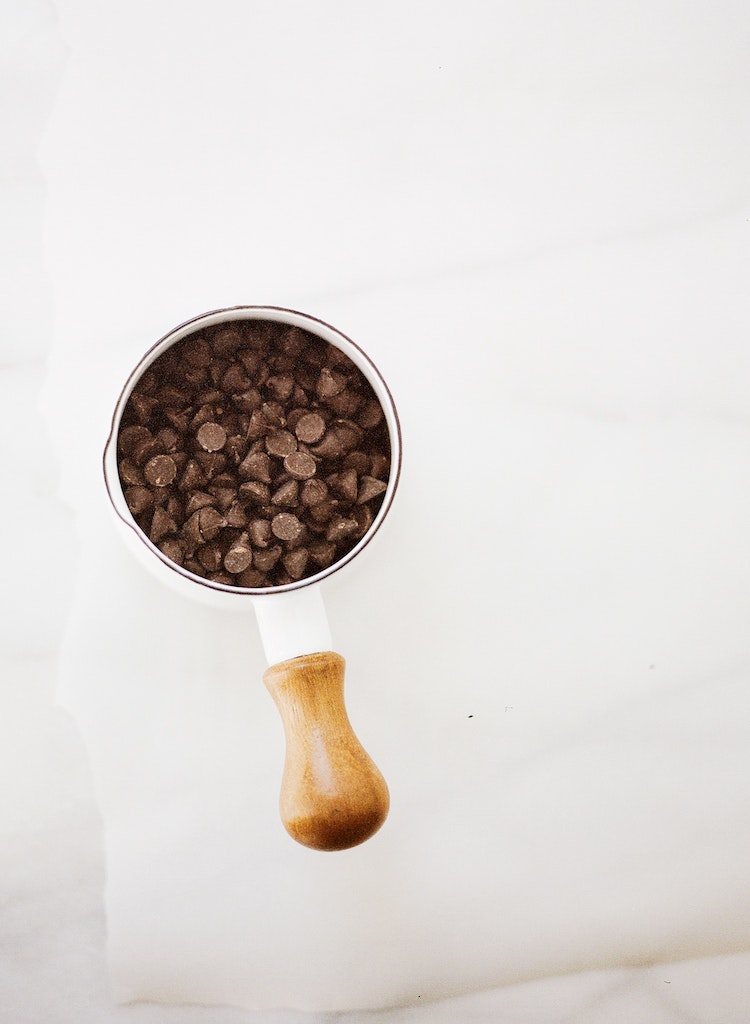
They met at a potluck and bonded over Larry’s incredible cookies. “Scharffen Berger,” he murmured later as he kissed Justine’s neck. “Chocolate chips…for adults only.” She fell hard when he explained how he ground his own flour from organic wheat.
He planned the perfect meal for popping the question: Arugula salad with figs, prosciutto, and truffle oil. Coq au Vin with homemade egg noodles. To finish? Dark chocolate semifreddo drizzled with salted caramel syrup.
She said yes to seconds, and to forever with him. No traditional fondant-entombed wedding cake for them—each table at the reception was presented with a Croquembouche.
© Copyright 2019 Paula Johnson. All rights reserved.
Paula Johnson is the founder and editrix of The Rose City Sisters website. Join her email list and get invited to her book launch party!
The little child sat between her smiling parents whose knees almost touched their chins. The teacher in black, reclined in a chair shaped like a purple shoe, gazed down at the family eager to hear about their first-grader; they paid for this privilege. Most couldn’t ignore the Scorpion’s tail waving languidly over the teacher’s head, but these parents did. The teacher spoke to the child in her baby voice: “Who are your friends here?” She asked, cocking her head like a bird. The child kept her gaze, not to be anathematized and said back “You?”
© Copyright 2018 Margaret Welsh. All rights reserved.
Margaret Welsh is a certified yoga therapist and actress who lives in Los Angeles.

“Mommy! Look!”
From the yard I watch my daughter lift her wings and jump from the deck. She hovers for a moment then tumbles to the grass. Robin climbs back up the steps. I wave and smile.
“Mommy! Watch me!”
Face scrunched with concentration she spreads her wings and launches into the air. Sunlight filters through the membrane of her wings, casting glitter across the yard. I see her silhouette against the blue sky as she soars higher.
I hear her voice as it drifts from the clouds.
“Mommy! I did it! I can fly!”
© Copyright 2018 Susan Miller. All rights reserved. Photo courtesy of Pexels.
• • • • •
Susan Miller lives in South Dakota in a Green House. She loves yoga, weaving, gardening and genealogy. In her free time, she travels, drinks craft beer and enjoys bird watching. Susan is married and the mother of sons.
“Mommy, look! A Black baby!” bellowed my four-year-old son, Silas, in a volume characteristic of all children his age. “He’s so cuuuute!”
I felt my insides immediately freeze, unsure whether to be mortified or not. Outwardly, I kept idling my shopping cart along the grocery store aisle, being careful not to quicken or slow my pace, eyes pretending to look around for the brand of ground thyme I like but can never remember before stealing a glance at the woman wearing the tiny baby in a carrier. We couldn’t have looked more different. She was tall; I am short, not even able to reach the lone packet of Red Star yeast she effortlessly extracted from the top shelf and dropped into her cart. She had shimmering dark caramel skin; I have pasty, dull skin with freckles. She had thick African braids bundled up like a crown on her head, making her look even taller; I have thin brown hair that clings to my head like it’s afraid to go out into the world.
Continue reading The Black Baby by Kelly I. Hitchcock
You tell me it’s about space, a need to create your own life. Dad and sister Nancy will give me a better life.
Nancy calls me sweetheart. It sounds rehearsed for someone whose favorite word rhymes with “duck.” Dad communicates in grunts. Flatulence.
You taught me to admire Joyce Carol Oates, play Debussy. You said I was special. Said you’d see my words on a bookshelf.
You said fighting with Dad over freedom had nothing to do with me.
Why don’t you talk?
I store fleeting words. Do well. A mother can love from afar.
Talk to me. Please.
© Copyright 2020 Yash Seyedbagheri. All rights reserved.
• • • • •
Yash Seyedbagheri is a graduate of Colorado State University’s MFA program in fiction. His work is forthcoming or has been published in WestWard Quarterly, Café Lit, 50 Word Stories, (mac)ro (mic), and Ariel Chart.
Photo by Darius Bashar on Unsplash